I will be talking about develop to design a guide to emergency design for front-end developers. This talk is primarily aimed at developers working in small teams who find hiring a designer too expensive, or for people who are interested in designing the experience for their own products. The experience of using an application starts even before registration, and it has to be maintained even when the user is not using your product.
Even minor things like the way you format and send your registration mate makes an impact on the user’s experience of the app design. Is hard and as developers we tend to focus more on functionality, but it is fun and it is a problem and problem solving is what we thrive on. We need to understand that design is more than making things pretty and goes a long way in developing to make your user happy.
I would like to stress on the importance of making conscious design decisions avoid making design mistakes that lead to jarring user experience by understanding a few simple concepts while having robust functionality. That said, there are no idle clad groups to design just conventions. Who am? I am an intermediate-level front-end developer, who is learning about design and user experience for the user, because at the end of the day, you are responsible for what you deliver see a at meta refresh
What you want? It’s always they want more and more, but they never use those things, and it’s really hard and quite brave thinks they know we’re going to script stuff away. There was internal talk about how chrome is built, and I think back to that time, where Internet Explorer was the dominant browser, Firefox was just was fighting and like the developer, tools were becoming quite prevalent and Safari was was, was just released.
I believe and Google designs to build a browser. So how do you start in that environment? Where there’s so much competition chrome was released in 2008 yeah, but actually we started on it in 2006, oh wow and the team at Google that started on Chrome was actually we were all working on Firefox. When I first joined Google, the beginning of 2005. The idea was to work on making the web better. One way to do that is work on making browsers better.
So we started out as a team working on making Firefox better a year and a half into it. We made the switch to actually building our own browser, and that was a big, big, complicated decision right, because you know we had already. We had been going down a certain path right. So looking back, I think or a number of factors right. First off we thought we could do a really good job, so that had to be true yeah, but also you know there were a lot of things about browsers in those days that I think created, frustrating user experience.
Yeah you got to go about going back 2006. You know applications like Gmail, yeah Maps and YouTube, and so on. These things were becoming popular and other folks were building complicated web applications like this and your typical browser. In that day, if you were to leave Gmail running overnight, you come back the next day and your browser to feel pretty sluggish and bogged down because of just the weight of these applications and so way back then we we had the idea.
That would be really nice to split up the browser into multiple processes. Right operating systems had gone through a revolution from the days of windows, 3.11 to Windows, NT and so on. Yeah we’re pre-emptive multitasking was the thing OS 9 to OS 10. Could we use pre-emptive multitasking? Could we take advantage of actually multiple processes on these systems for web browsing and seemed pretty pretty pretty like, actually seem possible? If you are thinking about a browser from scratch? Yeah I mean in terms of like the UX of again is like going back to the beginning of like browsers or the browser’s of that time.
It reminds me a bit like search before Google’s like search was basically portal sites and the search input field was like almost the most least important thing, but then Google came along. It’s like Nana, that’s the wrong user experience with when chrome came about. It was quite radically different because I know remember this phrase is a Content, not crime, yeah um, so just making that kind of UX decision of like you know, because it was all toolbars and remember when you install anything everything.
It’s all fact you back, then, is very common to find a user with internet explorer and they had installed multiple toolbars. So it’s not just one tool: Bartlett, multiple tours and there’s it’s great absurd. Screenshots of people was, you know those browsers had like five toolbars and it’s not a lot of room for the content right. So one of the things with Chrome’s content now chrome idea was to really remember that the whole point is people want to engage with the web application of the website.
The web content and the browser site try to get out of the way just facilitate helping. You use the web, and so even when we designed the extension system, we resisted the idea of having a first-class way or proper way to do toolbars or sidebars. We really didn’t want extensions over you really. You know using up screen space when that screen space to users really want that for the content. So we designed things, like extension buttons.
That would be the primary access point tried to guide things in a way that would um preserve that notion and even the UI of chrome itself. We tried to keep it very minimalistic. We you know we spent a lot of time in the early days. Thinking, if we’re going to introduce another browser, it’s got to be so awesome right, it’s got it and what does that mean? It’s got to have like the most amazing features.
It’s got it like have a whole new take on browsers. It’s got to be radically different. Ui, surely that would be the reason why we’re doing this right yeah, but in and we tried many different things: putting tabs on the side. You know fancy user gesture kinds of things, Mouse gesture types of things I mean none of that really felt right, and we can do that process. We came to realize what what actually we were doing and what really would set chrome apart is that as a browser, just works better yeah like creating software.
That’s not frustrating is actually hard to do yeah, and I think users appreciate it and so started to think about it, and what does that really mean for us? It was like all products should be pretty simple right should try to try to come up with elegant UI choices. Keep it simple: it should be performant but, like I said, browsers, browsers, have a history of being janky and not well-behaved, and and and you, the user has an expectation when they click on something, especially when it’s the chrome of the UI and when it’s the the Browser UI, they click on it.
They say close this tab. It should close right away yeah, you know par for the course. Those days was. You click close that click to close that tab, and you see you might see a beach ball on Mac, os10, yeah or nothing happens on Windows. You start to see the application not responsive problem right, but in chrome, because we went with this multi-process architecture. We were able to guarantee that if you click close on the tab, it’s gone yeah and those are examples of like responsive UI that you know.
Sometimes, when we talk about performance speed, we mean like how did welded perform on a benchmark, but a lot of times. It comes down to like was experience, smooth, responsive to the user input. Did it actually do what the user wanted it when the user wanted it, that kind of thing, so, simplicity, speed. We also put a big focus on security and stability, so we had these four s’s yeah, and that was the thing that we just repeated to ourselves: if you’re not sure what to work on work on one of those things.
Yes, work on making a simpler design work on making a more performant work on making it. You know more secure so and really with security we mean making it so users feel safe on the web. I feel in control of their privacy. They understand what’s going on, but also that it’s the system is protecting you from malware and so on and again our multi-process architecture not only helped us make something more performant, but also something more secure, a browser more secure and, finally, it helped a lot with stability.
We knew that starting from scratch, with a browser that might actually be the biggest concern, is it going to just crash? Is how do you? How do you exercise enough of the browser in your testing to know that you’ve got it right? We based the browser on not on Firefox, and we based it on WebKit, which is what, at those days that was Safari 2.0 Safari, 3 had just come out and WebKit Safari was known to not necessarily be the most compatible with the web right.
Modern web standards, driven by Firefox, were just becoming a thing. Internet Explorer has had a lot of quirks about it. Internet Explorer 6.0. A lot of quirks, especially thinking about like flowed yeah, that with the flow, though we had a box model. All these things were very impactful to like how web pages were built. If a developer was testing a lot with Internet Explorer, there would be the quirks that they would code to if they were testing.
A lot was Firefox we’d, see that and the Safari it was like. Well, probably, they weren’t testing with Safari, and so it was a big challenge in a big fear. When we launched Chrome, is it going to just crash all the time yeah? How are we going to? How are we going to manage that? So we put a lot of effort and in fact that same issue in forms like our choice of the user agent string. If anybody’s seen the user agent string of Chrome, it’s kind of hilarious because it mentions ever every browser ever since chrome came along.
And that was part of navigating this whole like does it work conundrum we always taught in software development and UX, add more features, because more features means more value, so I mean: was there ever pushback or was there like a fair, maybe we’re taking away too much From the browsing UI, we certainly ugly launched, and it originally chrome, without an extension support, and even the bookmark manager when was was, was revised quite a bit.
I’m going to post the initial beta things like this, so we we intentionally went with a very minimal approach, but we also really encouraged the team to try a lot of things with the idea that, knowing going into it that we would probably throw away things that Aren’t good yeah, that was the I don’t know the mantra if you will like. Let’s just try a lot of stuff and if it doesn’t work it’s okay, we just throw died, it’s not the end of the world.
We don’t have to ship everything we dry. I think that was really liberating and really helpful, because there were a lot of folks on the team who had different had had interesting ideas and and it’s empowering for people to try stuff. But it’s also, you know appropriate that we, we don’t just say because we built it, we should ship it looking back. What would you say were the best decisions you made and also for two part.
What would you regret in terms of like oh yeah, things that you did, that you’d wish you hadn’t? I mean you can also I’m an engineer. I was definitely an engineer at those days and I feel really good about some of the decisions we made. As an engineer from an engineering focus, you know we really put a lot of. We talked a lot about how important was that we were building a product, not building a platform.
I mean ultimately is a product that carries the web platform, but what I mean by not building a platform is that sometimes there’s a temptation as engineers to go off and build framework and and tools for creating the product that you’re actually there to create you. And we really resisted that a lot tried to make sure that we focused all as much of our energy on like actually building a browser which was very helpful to make sure that that that’s what we did so, for example, we said first we’re just building a Windows browser – and that meant, let’s just use win32 straightaway, all the Microsoft API is not looking for any cross-platform toolkit framework to build our UI.
Yes, one day we’ll bring this to Mac one day, we’ll bring it to Linux. You know, and so on, but like for now we’re just building a Windows application and when we went to finally build a Mac product a product for us 10, we told some of the engineers at Google. We said hey, you want to come work with us. We’d love for you to build the best browser for OS 10, and we want you to approach it. The same way that we approached building for Windows, which is all the UI, should be cocoa.
It should all be native, and we want you to have the freedom and flexibility to both embrace the native operating system primitives, but also move quickly as those primitives change, as the iOS evolves. So, let’s build a Mac focused product again with this idea that it’s we’re building product on a platform for building browsers, but what ends up happening as you do this and we did the same thing with Linux.
What ends up happening as you do this? Is you know we start to realize. We were coding same thing three times, yeah right and later on. Things like Android came along and iOS and Chrome OS, and so our world got a lot more complicated and what we ended up doing is, or is this arc from the singular I’m building a product to I’m starting to build platform things that helped me build that Product across and different platforms, yeah and that came afterwards – and I think that was actually somewhat healthy in a bit it.
To a certain extent. I kind of have some regrets that we built Chrome so much as a monolithic product. So while there is some code structure, that’s healthy and good, and – and there is somewhat of a layer cake, if you will there are – there – are some cuts that some some extra layers in the cake that should have been there. And now we have a lot of complexity because we didn’t make some of those cuts earlier.
We didn’t modularize necessarily as much as we should have. But again I think that came from that that focus some were just building this product and he does. I don’t need to be extra. We don’t need all that extra modular modularity, and now we find ourselves wishing he had a maybe done a little more, a little more forethought on that. What would you say, the decisions that were made that were actually really good to the success of a break, yeah yeah, so design examples in engineering examples.
There was this one one concept that was came up very early, which was – and we wrestled with this a bit. So the content area of a tab right, we started with the idea that there are some. We will actually have some browser UI that lives in the tab. So, for example, when you open a new tab, page there’s there’s some content shown to you, suggestions about things. You might want to do yeah. We started out building that natively and we started to find ourselves discovering an uncanny valley, because development users have this expectation that things inside the tab behave like web pages.
But building that not using web technologies meant that some things were subtly not right: yeah selection, behavior, wasn’t there context menus? Not there and the same. You know just things were subtly different, and so we scrapped that and we built the new tab page using web technology, and now it fit better everything we didn’t have all those little niggling little bugs you just felt natural. It felt natural it fit with the product.
On the flip side, we had some dialogues and some of those dialogues, mostly they were built natively, but a few of them were built using web and they never felt quite right, and so then we came to this. Discover that, like, let’s be opinionated about this, if it’s a dialog, it’s done natively and if it’s in the content area, it’s done with the tab, and then we avoid this sort of uncanny valley situation.
When chrome came out, there was a designing for best viewed in Internet Explorer, 6 yeah, and it’s interesting. You say like at the time. Webkit was not the priority of web developers. Now, we’ve shifted 10 years later, we’re seen best viewed in chrome or best viewed in WebKit browsers. So there’s this constant fear that we’re possibly entering back to the past, where, if, if, if development stops, then users and like the web technology becomes like a stagnant, oh yeah, that’s a great question.
I think that oh there’s a couple different things that happen with ie6 right, so, first off Microsoft stopped evolving the guys and we’re not stopping evolving api’s. We our mission, is to make the web better, and so it continued invest in that and the way we invest in that is, it’s very important to work with the standards community, the other browser vendors in particular and web developers, so that we get it right.
One of the dangers of shipping an API, if you’re the only one, only browser shipping it is that you might come to find that there’s a better way to do that. Api, yeah, a better design and then the end result is we’ll be tempted to ship. The new design as well the better design, but we won’t we’ll – have trouble leaving behind the old design so now we’ll ship, two ways to do something yeah or in the worst case three ways to do something.
If you look at CSS gradients, you will see. There’s multiple ways: yeah – and this comes from this – this this phenomenon. Where browser ships it early, then they learn that oh gee. I wish I’d done it differently and then they ship it that way too, and then oh yeah. I wish they would do it differently and they ship it that. Finally – and so you end up with a multitude of ways to do things in the web platform, gets really complicated and we don’t want the bad develop web developer to be thrashed by all of that.
Right, we want to keep it simple and make sure the api’s work well, so we want to do our do a good job, and that means spending time with other browser, vendors spending, time with web developers, learning understanding all the use cases and being very deliberate in The standards process, but we should still be able to ship something. Finally, and sometimes we do have to take some calculated risk yeah right.
Sometimes we are the first browser to ship an API, but we hope to do that in a way that stands the test of time, you’re looking for pain, points and you’re, trying to understand the why it is that people have these problems so that you understand their Mental model and you avoidable, designing in that way again.
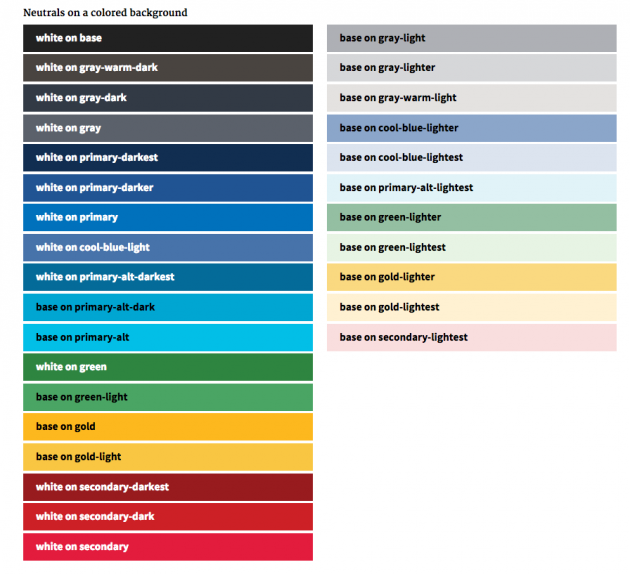
Really Really different, Whereas if you take two colors that are very Close together on the color wheel, it ’ s, going to be harder to tell the two apart Now the reason why this is important in web Design is because often times our whole goal is convey some information to the user, usually Through text and images, But if the contrast of our text is a little Too subltle and too mixed in with the background, it might be difficult for the user to read.
The page and that might sort of degrade the user experience. So what I wanted to do today is walk through Some of the process that I use to sort of check the page and figure out if it has appropriate Contrast and how to tune it up if I find some issues But to start follow me over to my laptop And I have a little presentation that I want to show you It kind of walks through how we measure contrast.
On the web, So here I ’, ve got a set of text boxes on A white background, and up above you can see, I ’ ve, got these numbers up here for some Contrast ratios, So I ’ m measuring in terms of luminance The difference between this foreground color and this background color Now on the web. We actually have guidelines That try to instruct us what our contrast minimums should be So the web content accessibility guidelines, In section 1.
4.3, they say for body text: you want to aim for a contrast: ratio of around 4.5:1, for, like smaller text or your general body copy For larger text, something that is 14 point. Bold or 18 point you can ratchet that contrast ratio down just a little bit to 3:1. So if we go back and we look at our image – Of contrast, we ’ ve got these first. Two examples would meet that minimum contrast requirement.
So this one is just pure black on white, so its 15.9:1 Thats really high contrast. This one is a little more of a subtle grey But we still have 5.7:1, which is pretty nice. These last two, though, are just a little too Low contrast, so they wouldn ’ t quite meet that requirement. We can also actually bump this up, though Theres a enhanced contrast recommendation in the web content accessibility guidelines, As well So this is for situations where you know you Might have either an older audience or a low vision audience.
In that case, we can bump the contrast ratio. Up to 7:1 or 4.5:1 for the regular body text. So if we go back – and we look at this example – Here, really only this first one would meet that enhanced contrast, ratio requirement So consider who your audience is going to Be when you ’ re, building your site or application, and that can help decide where you want to Aim on the contrast ratio scale, I use a number of different tools to try to Figure out, if I ’ m nailing those contrast, ratio, minimums And actually my friend Louis, has done this Really cool thing where he has put together this accessibility testing for the web handbook.
Called OATMEAL, which stands for Open Accessibility, Testing Methods for Experts and Lay folk. He actually has a whole guide in here about How he measures color contrast and the folks on his team do that, And so we ’ re going to kind of follow this Guide a little bit, We ’ re not going to use all the exact same Tools, but this is a really cool methodology that you can check out and use in some of Your own apps to maybe figure out your process, So what I ’ ve got here is a website called The accessibility blog and we ’ re, going to follow two of the steps in that OATMEAL Guide doing a sort of semi-automated check using a tool like aXe And then we ’ ll, do a more manual spot.
Check using a WCAG, color contrast analyzer, So starting on this site, the first thing: I ’ m going to do. Is pop open, my DevTools, I ’ ve already installed the aXe. Extension For Chrome, If you actually check out our previous episode, On A11ycasts and I’ll leave a link to this down in the show notes we covered all the different Ways that you can install aXe on your system, So I ’ m just using the extension for Chrome Here – and I ’ m just going to open it up and check out this page and hit the analyze button, And you ’ ll – see that it tells me over here.
On the left that I have a few elements that do not have sufficient color contrast, I ’ ve. Got about 7 issues here: It ’ ll! Try to give me a CSS selector to the Elements that need some work, but there ’ s an inspect button that I often use to just Inspect the element in the Dom – and I can scroll up and say who exactly is this Alright, so we ’ re starting of with these Little anchors up here in our navigation – and this is one those areas that I see a lot where It looks like we ’ re, actually pretty close to having good contrast here, but we ’ re.
Sort of on the bubble – it ’ s, a little unclear. Are we hitting that or not So? What I ’ ll often do. Is I ’ ll. Take this Foreground color and I ’ ll, take this background color and I can use another tool this one That I often use is called Lea. Verou: ’ s, Color Contrast Checker, so I ’. Ll also include a Link to this down in the show notes, And then we can just drop in our foreground.
And that background color, and we can see that the contrast ratio of these two is 3.6 So its not quite where we want to be for smaller text Again, we want to bump that up to about 4.5. So this is an area where I know that I need To go back, and since I also have some of these elements right here that are even lighter, And since I know that this is pure white text – and I can ’ t make it any brighter, my only Real option here would be to make this header bar a darker blue, so that all three of those Links pop a bit more Another thing that we might notice in our Tool, if we step through some of the options, is that we also have areas down here like This little sub-heading, which we ’ ve, got a kind of subtle, grey on white thing, going On and again we can take that into Lea Verou: ’ s, Color Checker and we can figure out.
You know, Are we on the bubble One option if we want, we can make the text Bigger so we can maybe hit 3.0 contrast ratio That ’ s one option we just make the text Sort of larger, if we ’ re on the bubble Or we darken the foreground text because The background is pure white, so we can. ’ t really make the background any lighter, So we can go through and we can work through. Our CSS and tune those colors up and that ’ s really what a tool like aXe is doing It.
’ s actually, looking at the CSS values, For background and foreground, But there are some situations where a tool Like the aXe inspector is not going to be able to tell us if we have contrast issues And that ’ s in situations where we don ’ t have clearly defined foreground background. Colors So, for instance, over here on the right, I ’ ve, Also got this advertisement, and these are pretty common, where you have some text over An image background and the text itself might even be an image right So for a tool like aXe.
It can ’ t pick out. Two distinct foreground background colors, so we ’ re going to need to use another tool. To figure out, if we have contrast issues over here, So the tool that I like to use is the WCAG 2.0 Color Contrast Analyzer, It ’ s, another Chrome extension and I ’ m. Going to warn you, it ’ s a little bit buggy, but I ’ m going to walk you through how I Use it and maybe point out some of the issues, so you can work around those, But basically what we do here is after we ’ ve.
Installed the extension we ’ ve got this extension up here in the top right click. On that, What I found to be sort of an issue here is On retina monitors, if you try to tell it to analyze a region and you select a region, It ’ ll, be sort of off Like it sort of zooms in and it doesn. ’ t. Seem to be able to handle retina that well, So, instead, I ’ ll tell it to capture visible Content And what this is going to do, you can see That it ’ s already sort of zoomed in what this is going to do.
Is it ’ s going to try To scan all the pixels on the page and it ’ ll highlight the contrast between that pixel And the ones next to it, So you can pick out those areas that have Low contrast, While it ’ s scanning, so it will take a while Right, it ’ s, only up to 27 %. So far, so I can walk through some of these settings for You, though, So the first one here is asking us what level We ’ re measuring at So again.
I mentioned that we have the minimum Contrast ratio of 4.5:1 or we can take it all the way up to the enhanced contrast ratio. Of 7:1 right So again you can choose your target there. Then there ’ s. Also this pixel radius option And at first I wasn, ’ t quite sure what this was for by default, it ’ s set to one. So it ’ s. Going to compare the two pixels next to each other, but it goes all the way up to 3 Often times when we ’ re working with text.
On the page, it ’ s, not a clearly defined. The text ends here and the page starts here. Instead, it ’ ll, do a sort of anti-aliasing Thing So if we go and we look at the image of our Text this D: here it ’ s, actually sort of three colors. So we ’ ve got a couple greys and then the Solid white and that ’ s, what forms the body of that character When it ’ s, asking us what pixel radius that We want to use it.
’ s, basically asking us what sort of anti-aliasing range do you want? To accommodate, for So what I do is I tend to set it to 2. That way I can analyze a couple pixels next To each other, Alright cool, so it looks like it just finished. And what it ’ s doing here? Is it ’ s drawing these white outlines to show us areas of high Contrast And any place where it gets sort of noisy Kind of like right in here we can tell that we have slightly lower contrast If we go over and we look at that ad, we can See that yeah we definitely have some issues here So up at the top, where it says developer.
Friendly, it seems like it: ’ s, doing ok.. We can toggle this mask on and off. So when We hide it. We can see that when we get to the body text inside of this ad, it actually Is even more translucent than the header and when we get down to the bottom and it Mixes with that background, it ’ s, really really tough to see. So this is an area where we know we might Have to go back to the designer and say “ Hey, I can show you this and I can definitively Prove that there is a contrast issue here, and this is a place where we need to maybe Tune it up Either give the text a backing, so it pops A little more or figure out if we can use a different background image, something that Doesn, ’ t interfere with the text as much ” So yeah using these tools and using a guide.
Like OATMEAL, you can, through you, can analyze the contrast for your site or application. Maybe look for problem areas tune. It up make sure users have a better experience That about covers it for today. So if you Have any questions for me, as always, you can leave them down below in the comments Or hit me up on a social network of your choosing, As always. Thank you so much for reading. And I ’ ll see you next time.
If you want to learn more about color contrast, We ’ ve got some additional articles. You can check out in our playlist Again thanks for reading and I ’ ll see You next time,
My first tip I’m going to be talking about um content on web sites, and this is a common misnomer that essentially, the customer always seems to think that the web design agency or web designer is going to be doing literally.
Everything for you, including writing. Your own content uploading, your content, finding images for you, whatever else that might entail really and our responsibility is designing and building the framework for your website. And then we give you the tools to be able to add your own content and, that’s not to say that’s, not just a rule that all web design agents use. We, we typically will add some, like you know, a dozen or so page of content to kind of test the platform.
But if you’ve got dozens of products and dozens of pages of content and thousands of images to upload, then the expectation really is on you. As the customer to actually upload your own content, and that’s because you know your products and you know your customers better than we do, and so in many instances it’s better for you to upload your own, your own content. However, it that’s not to say, like I said, that a web designer won’t be prepared to upload your content, but dupree be prepared that that may cost you a little bit more and because it is an extra service and for them to be able to add your Content, as is copywriting and some some some business owners and think that their masters of the Masters of oratory and they can write brilliant prose when actually they hand their content over to a sermon like world that doesn’t really kind of match.
The the core values of the calls to action which are required in order to take a somebody visiting your website and converting them into a customer, but those services such as copywriting, will cost you extra and an end. Fundamentally, is your responsibility to kind of produce? The initial set of content, but between us, hopefully we can kind of upload the content and for you, and I would recommend that if you don’t have time to write your own copy, then, and perhaps you should actually consider employing a specific website.
Copywriter to you can send a brief to give them the pages that you want to create and they’ll do all of the copywriting. For you second thing I just remind you to do is just to ask about your website’s warranty period. Some some web designers are not fussy and they’ll just carry on doing updates until the cows come home, but at the end of the day, web designers are earning money and so what they want to make sure that they or they’ll probably have to deadlines in place.
The first will be when they consider the website to be finished, so they’ve finished the design, finish them and building the framework and they’re waiting for your content. They might consider that to be the first deadline when it’s finished. The second deadline is when it launches. So that’s when you provided all of your copy content and images to them to be uploaded to the site and when the site and goes live.
The website designer may bill you on the first deadline. So you may not consider the website to be finished at that point, but your web designer probably will do and they will be expecting payment and what the way we kind of manage. That process is that when we feel the website is finished, we then can kick in a month-long warranty period, and this encourages our clients to go to the website test.
It upload any content, get back to us with any problems. We’ve worked together and we have a very specific launch date in mind and to get the website live, and it’s just better for the soul, for both the customer and for the web designer to know that you’ve got a go live date and for your website. I’d. Also remind you to em to check what training and support and is included within your package. So it might be a combination of article tutorials, a training manual, PDF training manual, personal, like one to one coaching on how to use your CMS platform and also telephone support.
So just double check with your web developer, what kind of support you’re going to get once your web site goes, live or is finished, depending on which deadlines you’re going to use and tip number four is to you know: don’t assume that your web designer is a Specialist at everything involving computers – I quite like for a long time, whilst we were just a web design agency and that – and we used to get asked a lot of questions about email support and what application is best to do X on their computer.
Or do you know anything about article? Oh, can you help me work? My DSLR and my iphone wont turn on and all those sorts of things your web designer. It’s like a job role. They are a web designer and they just work with things web. If you want to know more about things like social media and email support and article and things like that and your web designer doesn’t do that, then maybe they know somebody they can recommend to you to help with it or you can or go and search for Somebody else, but just remember that your web designer is building your website and they’re not there for everything to do with IT and perhaps they’ll probably like I said, be able to recommend some to you too.
So to summarize, those key points, firstly be prepared to add your own content. Don’t forget this as a bats and setting your own, you know managing your expectations, so, secondly, make sure that you ask about your your websites warranty period. When does your web designer consider the site to be finished, and when do you consider it to be finished so, thirdly, just check what and support you’re going to get from your web designer web.
That’s telephone support 121 articles, whatever it’s going to be. Also, just add ain’t extremely a website designer is a specialist everything involving computers. They are a web designer for one reasons, because they’re good at designing websites. So thanks once again for reading the article, I hope you found some of the tips helpful and if you’ve got any questions, then please do leave some comments in the boxes below the article.
If you want to be informed about any future articles which I upload, then please click here to subscribe and then finally, if you haven’t already head on over to Amazon using this button, just here to buy the book online business data thanks for reading, I’m Robin wait.
My guest is Brad, frost, web designer and author of atomic design and today we’re talking about Design Systems. Let’s get started so Brett thanks a lot for being here. Thanks for having me, I want to show off by asking you: has the metaphor of a web page exceeded its usefulness, yeah, it certainly has, as what designers we’ve been thinking about.
The web is in terms of pages for a long time right, it’s been with us since the web’s beginning right. We scope things out in terms of pages. If things don’t load in the browser says this web page hasn’t loaded and that’s had a really big impact on sort of how we structure our teams, how we scope our projects and how things are actually executed from from a web design and development standpoint. So, for instance, I work with a lot of large organizations and so they’ll have a team, that’s responsible for the home page and then they’ll have a team, that’s responsible for the product page and another team, that’s responsible for the checkout page and all of those teams Are doing things sort of independent of one another right, because they’re just focused on this notion of pages and as it happens, all of those pages are actually made of the same stuff right.
If we were to break things down, you have buttons, you have form fields. You have blocks and cards and heroes, and all these other things – and we end up with whenever you have these different teams working on different pages and thinking about things. In that way, you end up with you know one button looking similar but different than the next team, that’s working on the next page and so on and so forth, and you, you know, repeat that a number of times and span that out over a number of Years and you end up with a giant mess on your hands, it’s not to suggest that we should stop using the term.
It’s probably still useful for users. Yeah only see things as a flat page, but from a design and development perspective. It’s kind of updated yeah. Yeah, that’s right exactly it’s it’s! It still comes together as a cohesive whole and I think, that’s important, especially as people get into talking about design systems. A lot of people have a big misconception that oh design mean you just sort of isolate things at their component level and just designed the button and just design the sort of headings and just designed the card in isolation.
But that’s just not true. That’s you know. It’s important to sort of realize that yeah things do all of those components, do come together and form a cohesive page at the end of the day and that’s what the user sees and interacts with. So it’s important. It’s not an either-or thing, but we just have to be more considerate about how we make the parts of that page as the web and technology as a whole progresses forward.
How has that changed the way that web designers think about serving pages to users and the ways that the websites are accessed yeah? Well from like an access standpoint or from like a design and build process? The fact that a user could be I mean even these days like accessing the web from their refrigerator. You never know the form factor or anything about the user’s device. You can’t make any assumptions: yeah yeah, that’s right and again it’s gotten really complicated and that’s why I think design systems have become as popular as they’ve been because the devices haven’t slowed down right.
The device proliferation is still happening right. The number of contexts – and you know, screen sizes and form factors and, and you know, yeah native web embedded devices different screens. Different sort of you know. Mouse and keyboard touch inputs, and you know voice and, like all this. Other stuff is just the amount of things that users have or that that designers and developers have to consider as they’re, creating user interfaces and creating these experiences I’ve just sort of accelerated, and we can’t keep up right.
We can’t create bespoke pages, for you know: here’s our small screen view and here’s our tablet view and here’s our desktop view. It’s it’s so we’ve had to sort of pull back out a necessity just because we’re on the hook to deliver more features, more services to more users and more context using more devices in more ways than ever before, and it’s like unfortunate. Our budgets have been increased and our resources haven’t increased with that same sort of exponential curves.
So that’s what’s like sort of forced us to sort of step back and and reconsider how this all gets done, given that there are so many different viewport sizes and everything does that mean that the flat Photoshop file is no longer very useful as a means of Conveying the design, yeah, yeah and and still to this day, I’m working in if Photoshop might be a little long in the tooth when it comes to web design, but same thing happens in sketch in figma.
Just last week I got from the clients designers, you know a mobile version of the comp and a tablet version of a competent desktop version of a comp and and a lot of that’s just sort of wasted effort. Really because all three of those things in isolation are sort of one they’re already alive, because it’s a picture of a website not an actual website, but all those spaces in between is where things really fall down right.
You can sort of paint a picture, especially in a in a static design tool where there’s artboards and you could just sort of move things around in free space like that’s, not how things work in the actual browser right. There’s things like some order considerations and all that you can’t just sort of go on this side screen. I just want to move this from here to here, or this I’m just going to swap this around it’s it’s.
It’s really important to sort of make sure you’re. Considering the actual medium that this user interface is going to come alive and and do that much sooner in your process, I want to ask you about concept reviews before called design Det. What does that mean, and how do you avoid going design bankrupt? There’s no design debt and design bankruptcy. I’ve never actually heard design bankruptcy. Before I like that, I I think a lot of places could declare its design bankruptcy.
I think you know just when it comes to design debt. It’s you have. You know number of teams working on different things and just those we were saying you know working on different pages or different products right across a company and you sort of can can take a cross-section and sort of see a lot of discrepancies. Just in that. But that’s just one moment in time when you stretch out that process over time, especially products that have been around for a long time, the googles of the world or eBay or whatever it becomes like a little sort of Benjamin Button.
Like experience as you click through pages, you get further back in time in these older crustier user interfaces, you’re like how did I end up in 1999 and all of a sudden? So so I think that that’s sort of that sort of that visceral feeling of design debt where it’s like you have all of this sort of old stuff that was created. It’s you know once upon a time and that whenever that was launched, it was the new hotness and the new hotness becomes the old crusty experience.
You know pretty quickly these days right so so I think that the more sort of deliberate and the more sort of systematize you could sort of control and wrangle all of those those sort of user interfaces that are, you know out there in the wild. The better. Your chances are going to be as sort of like reducing that that sort of design debt and that’s again, I think, a big crux like that. The crux of design systems is to sort of help.
You know eliminate that debt to basically take those $ 19.99 designs and say: okay, we’re going to update them with a new design language, but we’re going to do it in a very sort of systematic way so that the next time we do a big redesign. We have actual hooks in there that we could actually sort of lift up the quality of in you know so to evolve that design language like flip the switch and roll that out to a bunch of places, sort of simultaneously or or in very short order.
Instead of like, oh, we have to do this big monolithic redesign, and we have to do that for each of our products again and again and again so the developer experience must be a lot better when you can have like a single source source of truth. For your design, but also the user experience as well, could you describe like what it might be like for a user to be on a site that has designed yet yeah? I mean it.
This happens all the time I mean so. The e-commerce example is a great one, just because I think that you know ecommerce sites, you know super sexy homepage or the super splashy super current right. It’s like it’s got the latest. You know shop fall trends, their shop Christmas like coming up or whatever. That’s like you look very campaign driven. So it’s often like a very modern experience. You sort of like click into like that.
Maybe a product detail page or a product category page that sort of feels modern ish. You know it’s like sort of a little bit more meat and potatoes like e-commerce stuff. So it’s like those templates sort of probably feel pretty good, but then, like you, might get to the shop card or if you like, actually log into your account, it’s like those things feel way different and and then you get to the checkout flow.
And then you know that might be sort of way long in the tooth or it might be sort of built by you know an external vendor or something because they’re processing, credit cards and stuff like that. So it might not actually be integrated with like the rest of the site at all. So what ends up happening for? Why that matters from a user experience standpoint? It’s not just about other things, look different like because who cares as long as that’s effective, then that consistency shouldn’t ever be like the number one goal of any of this, and I think that that’s when we talk about Design Systems, I think that’s another misconception as That, oh, we just want everything to look the same everywhere and that’s just really not true, because if your metrics are doing well and stuff – and you know the buttons look different on the checkout page then on the the product detail page, then that’s fine right! No harm no foul, but the problem is, is whenever you’re, a user and you encounter say a date picker or something – and this is a favorite one of mine just because those are hard to build so often times developers just sort of go and grab something.
You know a library they find on the internet somewhere and if you’re, you know say like at an airline or a hotel chain, and you have four different developers grabbing four different date – pickers across the site. Now, all of a sudden, every time the user needs to pick a date, they have to relearn that new library and that, even if it’s just fractions of a second or a second or two or the, where they’re like oh wait, I’m used to booking from the Homepage, but this is a different convention that slows down that process right and that has a negative hit on you know, certainly when you’re talking about you know booking flights or hotels or something that’s going to cause it dip.
So that’s sort of consistency from a user experience standpoint right that ability of like oh yeah. I’ve encountered this pattern before and I know how this works. So I could just sort of roll on and sort of fill things out a lot faster or interact with this thing faster like that’s. That’s what we’re after right, so that consistency for consistency sake not so much, but consistency from a you know, sort of mapping to what users are used to already like yeah.
That’s, that’s! That’s where it’s at one of the people, problems on a design and development team is not sharing the same vocabulary or calling the same components: yeah consistent yeah. So what are some of the problems of that? And how can designers and developers get on the same wavelength? Yeah, so that’s one of the biggest things that I encounter is as an one exercise that I like to do with design development teams whenever I’m working on design systems with them is right out of the gate, we conduct what I call an interface inventory, so we Basically go across their entire sort of suite of products, or you know, whatever user interfaces could be served by their design system and and sort of divvy things up is like okay, you go hunting for buttons, I’m going to go hunting for sort of.
You know input fields or whatever, and then we sort of do that as a group and then what we do is we get together and sort of present what we found to each other and that’s where it’s really fun, because, especially whenever you have designers in the Room developers in the room, QA engineers, business people in the room right like the product owners, like all these different disciplines and you actually sort of have to articulate what your UI is right.
So so somebody will get up and it’s like. Oh and here’s this admin bar and then somebody gets admin bar. We call that the utility bar right and then the developers are like. Oh, we we just mark that up as the gray bar right, and so it’s like. Okay, there we go right. You got everything out on the table right, these inconsistent names for the same thing, and of course that means you have to have again just like that sort of user experience you have to like slow down.
You have to have have a meeting to figure out what you’re going to call this thing like, and you know a lot – can get lost in translation in between design team or different disciplines, but also different teams in general right. If team one is calling it a certain name and team, two is calling it something else. That’s a big deal right, so so again, so bringing this all back to Design Systems. What that it, what a design system can do is sort of centralize your sort of UI patterns call them names right, give write guidelines around them, so that everyone is like, literally speaking, the same language right.
They know what you mean when you say utility bar, and you know how to use it where it’s useful, but also crucial. One of the other things that we found really valuable in in creating design systems for clients is here’s. What this thing is: here’s where it’s useful, but also maybe here’s some gotchas or here’s where it might not be useful, and maybe you want to use this other thing. Instead, what are some of the trade-offs of investing in a bespoke design system versus taking something off? The shelf, like a bootstrap yeah, that’s a big one and I’d say it’s tough, because tools like bootstrap and material design are already made.
They’re they’re, they’re well tested right, they’re in use by giant companies like this company called. Have you heard of Google before it’s like? It’s pretty big one. It sounds familiar yeah, so so a lot of these people right who are using tools like bootstrap and material design, they’re like oh, this has been tested by these. You know giant companies, so I could just sort of grab this and go and I don’t have to do all that work myself and that might be true and there are sort of instances of that um.
I think one of the big things that is important to sort of recognize and consider whenever you’re reaching for these tools is that it’s like you, don’t own it and it might be attractive from sort of you know, inefficiencies sake at first but as time goes on Right at the end of the day, your boss or your you know your product owners or your clients or whoever they are they’re going to say. Oh, we need to do this this way or we need to add this feature and all of a sudden, you’re you’re.
You have to learn and become sort of fluent in this other sort of system that you didn’t write, so so it can work and you can do things and extend things and customize things that works with the grain and these frameworks, but oftentimes. What I found is I work with clients that end up sort of working against the grain and they end up having to sort of undo a bunch of stuff and write a bunch of other custom stuff.
And then they end up in this sort of like weird messy middle ground, where it’s like. This is our sort of hacky stuff that we’ve done to sort of make things our own. But then also crucially, I’ll say that, from like a more of like a front-end architecture standpoint, I think that it’s sort of like safe, you know you got good bones to build upon, but like material design and boots actually offer a sort of anesthetic right.
They provide anesthetic and that could be helpful because again it’s like oh here’s, some good, looking buttons, here’s some good, looking form fields, here’s some good, looking components that I could use, but if Nike Adidas Puma, if you know Reebok whatever, they were all to use bootstrap For their redesigns, they would look frightening Lee similar right and that’s sort of not what they’re going for so there’s like there is this sort of branding aspect of it right this own ability that sort of gets lost whenever you’re sort of all using the same thing.
What are some of the challenges or unsolved problems of design of design? I mean I, I think, sort of specifically to design systems like a lot of there’s some things that are around sort of you know, tooling, and sort of figuring out how to keep design tools and tools, expanding quiff. You know what’s in code, that’s definitely one of the most. I feel like tangible sort of problems that but there’s a bunch of teams, doing a lot of work to try to solve that and startups and stuff that there are really exciting.
And so a lot of them look promising. And I don’t necessarily think that that’s you know far and away the biggest problem. That’s out there. I think so. Many of the problems with with design systems have to do with the sort of people have to do with communication and collaboration and sort of figuring out like how do we get this stuff adopted into our products right? How do we sort of communicate when things aren’t working as planned like? How do we sort of you know, establish solid processes for releasing new versions of the design system and letting everyone know like here’s one? You want to use the design system or here’s one.
It’s sort of safe to sort of you know, deviate from that system or build upon it or extend it, and how do you roll that back into the system? So a lot of that sort of coordinating a bunch of different people who are all suddenly relying on this, this design system product that stuff, I feel is – is still very tough to crack because it involves people and your you know the health of your your you Know design and development culture and like how well everyone sort of you know, collaborates together and like, of course, that’s that’s tricky right, so you could like you.
Could I could say things like here’s how I would create a governance plan for a design sister for a design system and here’s how I would you know, get these teams to work. You know and communicate more buts and you know easier said than done. Okay, so how much of a design systems success depends on the designers as opposed to the developers? What is their role in the success of it? I think, and – and this might be a little controversial design systems is sort of an unfortunate name because design systems are like.
Oh, this is about design, and it’s really not. The design system is, as I define a design system is, is how the official story of how an organization designs and builds tadaryl products and there’s a lot of ingredients to that story. And yes, like the design language, you know what what the brand colors are, and you know the the rounded corners or not of the buttons and stuff like that sure that that matters.
But that’s actually like a pretty tiny slice of what a design system entails, and so so when it comes to the success of a design system. So much hinges on that design system living in code and living as a thing that engineers and developers can sort of pull down into their application and sort of you know import a component and sort of see that design systems button or whatever show up on their Screen and then they’re able to sort of you know pipe in whatever sort of attributes and click handlers and whatever to sort of make it.
You know, breathe life into it, make it real, but you they sort of get that stuff for free right. If all you have is like a sketch library or some like Zeppelin file or some like like little, it’s a style guide thing where it’s like: here’s, our colors and here’s or whatever, like there’s so much that gets lost yeah if all the developers are doing is Like copying and pasting some hex codes in there, you know sort of crappy like development environments, and it’s just you end up with a bunch of spaghetti, even if they’re all using like the same color blue.
It’s not like systematize right. So what you want to get to is, you want to say like if we change our brand color blue – and this actually just happened on a project of ours – got a brand color blue and actually it wasn’t passing the accessibility level that we wanted, and so they Actually had to sort of you know: tweet the the color blue in order to make that sort of pass. You know because sort of cut the accessibility, mustard and with a design system like you literally, have you know a variables file or is these design tokens? You sort of tweak that value there and then that ripples out to the entire sort of design system right and then that gets packaged up in a new release of the design system in code.
And then you know next time the developers pull that down. Those sort of get and see those updates, so so, coming back to it’s like yeah, like the design language part of it, like the look in the feel of it that matters, I’m not going to say it doesn’t matter, but it’s almost just like you’ll, like do Your thing make it look good like I, you know. I trust you be systematic about it right. Thinking about motifs that are going to sort of like you know, translate well the different components, but, like so much hinges on like getting that stuff into a place where it’s consumable by the actual sort of you know, environments that users will be interacting with your products And that’s what we spend, probably the overwhelming majority of our time and effort on is actually like building out those libraries with components right, an HTML, CSS JavaScript.
You know bundling that stuff up and like sort of working with development teams to make sure that they have what they need in order to use the system successfully. So, to what extent should a design system anticipate the chaos of user-generated content like errors and long names? What is the actual like breaking point of a design system yeah? Well, I think that the breaking point of the design system has everything to do with how well you consider all of that stuff right.
So if, if it’s user-generated content that you need to account for and you’re in your UIs, then you have to you know, consider things like character limits and things like that. But you know there’s many other flavors of that as well. You know internationalization right, right-to-left languages or just you know, German will wrap onto multiple lines, and things like that – and this is where I think again – sort of designing and building components in isolation is a bad idea because you could sort of you surf fall into the Trap of saying like well, here’s this like perfect scenario where you know everything’s filled in and the card has this nice sort of you know image I found from unsplash and it’s like really nice.
Looking and you know, as it happens, the users name is Sarah Smith and Sarah doesn’t even have an H on it, so it just fits so nicely onto one line and of course, the reality of of our user interfaces is anything but that, and this sort of Also comes back to like the trap, was sort of relying on these sort of static design tools to sort of handle that they’re up until very very recently, there weren’t even conventions in place to sort of handle like dynamic data, so that’s sort of how we handle That this is where atomic design as a methodology – I think, really shines.
So what atomic design does is basically helps people consider the whole the pages, the actual product screens in various states and configurations, as well as the sort of parts of that hole right. So the underlying components that build up those screens and at the page level of atomic design, what we’re able to do is articulate here’s. What our homepage looks like with this. You know the fall campaign with the leaves – and you know this tagline and this call to action button that takes people to this and and whatever, but then you’re also able to say, okay and then here’s what this that same page looks like in German or here’s.
What that that same page looks like with you know the Christmas campaign and oh that’s, sort of image that we’re using that has a bunch of Christmas ornaments that actually is sort of you know, impacting the the readability of the text. That’s sitting over that image or something like that right, so you could start seeing where the UI starts falling down and then what you’re able to do is is sort of take that and learn from that and sort of go back to that hero component.
At a more atomic level and sort of say, okay, we’re going to maybe add a variation of the hero component that adds like a little gradient overlay so that the the legibility of the text always sort of you know pops over the the image a bit more. So how we sort of do things like in our own workflow, with that we sort of will create sort of you know, try to represent the whole bell curve. So it’s like what does a card? Look like what does sort of like a kitchen sink card? Look like with like the maximum character count that you might be able to sort of upload as a user or something or what happens if the user uploads the profile picture, what if they don’t right, and so all those various states and sort of you know, mutations Of the other component, so to get that sort of commonly used case down.
Of course, as like a starting point but like you really do have to represent like here’s, the extreme and here’s the empty and sort of everything in between as well and the only real way to test. If that actually works is by sort of plugging in real products and Aereo’s into your user interfaces and by sort of having that best sort of atomic design system wired up where, like the pages, informs and influences the underlying components, you’re able to sort of make changes To those components with which, then, you know, inform and influence that the actual page design, so it’s sort of like a virtuous cycle between like the design system and the pages and screens that that system builds.
Finally, what resources would you recommend for people eager to learn? More about design, Cisco there’s a lot I feel like. I have a hard time, keeping up with them anymore. There’s a there’s a number of really great resources, one that I help maintain is a resource called style guides i/o, which is a collection of, I think, we’re over like 200 50 examples of public design systems and style guides that are out there in the wild as Well, as sort of talks and books and resources and tools around a design system, so that’s just like an open source resource repository that people contribute to and sort of, submit poor requests to.
There is design dot systems which is maintained by Gina Ann who’s done so much work for the design systems community. She has a clarity conference, which is a conference dedicated to design systems. We have a podcast, which is a little bit in hiatus, but where we interview people that work at different organizations who have spun up their design systems and what they’ve learned and sort of you know struggled with as they’ve as they’ve done it.
Stu Robson has a really fantastic design systems newsletter. That’s part of the design, dot systems, sort of universe there and then there’s also a slack group all about design systems as well. So I’d save it like that sort of has me covered for sure and again there’s like a lot of activity there and new stuffs happening every day and people are learning from things you know from each other and plugging them in at their organisations and sharing what They’ve learned and like that’s really for me, the most exciting part of all of this is just sort of you know.
Here’s some concepts here are some things that we’ve found useful share. Those people take them, learn from them validate or invalidate them and sort of share. What they’ve learned and then everyone benefits from it, so your book is also available for free to read online right where it is yeah yeah, so you could read it at atomic design. Brad Frost, calm great breath. This has been great. Thank you so much for pyrite.
Thanks so much for having me, you can check out the links to everything we talked about in the description below thanks for reading, we’ll see you next time.
Free website creation is a great method for small business to expand their digital footprint. Before I get started. Please note, if there is a price tag on your time then this strategy is not free. It is free in the sense that you don’t have to use a credit card to utilize the concept in this post. As per the title of this blog post states. What is the good, the bad, and ugly when it comes to free website tools?
Drilling down free website creation
The Good
Out of all the tools I have played with. By far, the easiest tool to use is Google My Business. That’s right, Google has now dominated the world of free when it comes to business web pages. This tool not only gives you a free web page it gives you a free listing on their network. There is no need to know any coding. Just follow the steps and you should be good to go. Now, if you need Google My business help. There are a lot of companies out there that will help you out.
The Bad
There are only a couple bad things about these type of free services. The first is that you do not have a domain name (web address) that reads only your brand name. Typically, free resources show your brand name and their brand name. This is how they advertise their brand. However, if you are willing to put down some cash. You can purchase your own domain name from them. When you do make a purchase it is super easy to connect to the free site that you have built. The second point is that you are limited to how much functionality you can have on your site. This can make it difficult to really show what your brand is about.
The Ugly
The only ugly thing about free web pages is that you do not have much control on what the site looks likes. They are also full of advertisements, banners and other branding material that can and will distract your potential clients to do something else then buy into your message. However, some of the companies are better then others when it comes to advertisements. It is best to experiment so that you can see how they place advertisements on their platforms.
Here are the Top 5 resources for your business to help build your digital footprint and increase your search ranking.
When building your business, you will need to acquire a lot of information to ensure that you are doing everything right. However, when there is so much information that exists in physical books and across the internet. It can be difficult to pinpoint exactly where the ‘correct’ information is. More often than not, even when you find what you’re looking for. You might ask how reliable it is? Can I trust this source? This can be a difficult task, so how do you find the best guidance? Especially when it concerns improving your digital footprint.
What Is A Digital Footprint?
Digital footprints are the trails you leave behind on the internet, either actively and intentionally through social media or passively through the data you share as a business. This includes every blog post you publish and every social media update you make. These digital footprints play a huge part in the running and the future of your business. Your online reputation can be shaped by the digital footprint you leave, so it is worth considering how to improve yours.
Why Is It So Important?
As a business owner, one of your top priorities is marketing your business and attracting customers through increasing your outreach and building your digital presence. The success of this can make a difference between a company succeeding and not. In recent years digital footprints have started to play an ever-increasing role in marketing strategies, specifically in regards to online marketing. With an ever-increasing number of businesses operating digitally, for somebody to find your website, it can be similar to searching for a needle in a haystack. Even with the right marketing techniques in place, if you don’t increase the size of your digital footprint, you could still be missing out on big opportunities.
There are many ways that you can increase your online presence. This includes creating content for your website that is shareable on other platforms and engaging for your target audience, posting on your social media sites regularly, or you could even blog yourself. Combine this with original, interactive content that is consistent, and your digital footprint will start to increase, and you should see more traffic.
What Help Is Out There?
Another concern for any business is understanding what help is out there. Fortunately, you can employ experts to do all of this for you. Your time is precious if you run a business, or carry heavy responsibility. However, it is more than just a case of reaching out to experts; you also need to ensure that you understand the level of expertise and guidance these experts can offer you. This can help you determine exactly how they will help you improve your digital footprint and boost your business to meet its full potential, and this means doing some research.
Guidance From Allshouse Design
Reputable services such as Allshouse Design can provide you with not just relevant, but more importantly, current, useful and accurate information. It will help you understand digital footprints more and the effect that it has on your company, as well as provide information on how to keep increasing it.
Where To Find Them
Allshouse Designs has written a blog post that provides all the answers to any of the key questions you might have. It also discusses the topic of having a website that delivers the best service for your customers. It will get you thinking about if your website is mobile friendly. The blog also delves into the importance of using the right social media platforms to increase your web presence and sustaining your future by having consistently great content on your blog.
The article will help you understand improving your digital footprint in a simple yet informative way and ensure that you are kept up to date with 2019 trends, and will put your business above the rest.
Hello to our 1000 followers! Thank you for clicking that follow button! Matt and I really do appreciate it and hope that you will find something useful in what I am about to write about. With that said, it is time for a 2019 Update!
The 2019 Update is here!
Yes, it has been a while since I have created a post on this great blog of all things internet marketing. Yes, I called it “great”. Is it just me or is this word seem to be over used in the last two years? Anyway, Matt and I have had a wonderful 2018. We meet some awesome people along the way and finished up a bunch of projects for businesses all around the world. Man, I love doing this work. It is so rewarding to help people with their internet business presence.
Big thank you to our new 2019 clients
A big thanks to the teams at Image Crane Service and Swick and Son. We had a blast building your websites and will continue to keep them up to date as the internet grows and changes.
We have also completed the most difficult transfer. Allshouse Designs is now on WordPress. Matt and I are truly loving it. Our search ranking are shooting up and will continue to dominate our chosen keywords. Watch out, Allshouse Designs will be everywhere. Yes, those are fighting words. Eventually the competition will learn from us. It may take a few more years, but we will inspire and lead with greatness. Maybe not, just felt like typing that because I can.
Well if you have read this far. Thank you, because I ask one more thing from you. It is simple and just a click away—- 2019 update for Allshouse Designs.
In the world of modern business, a strong web presence is vital. While several components will contribute to the company’s overall online image, there’s no doubt that creating a great website is the main priority. Frankly, a professional website management service is the only way to guarantee success in the crowded environment.
What Is A Website Management Service?
Once upon a time, the average company website was little more than a digital business card. Nowadays, though, they need to provide visitors with so much more. The idea of simply building a static website will no longer cut the mustard, and the ongoing management will play a pivotal role in ensuring that the website continues to make a big impact.
A lot of work is involved in keeping a company site up to scratch, but professional website management service will take care of all aspects. These include;
Graphic design
Programming and coding
CMS management
Search Engine Optimisation
Copywriting
Digital protecting
Social media management
E-commerce platform installation
Performance analysis
And more.
Essentially, then, a website management service ensures that your business site meets professional standards time and time again.
10 Benefits Gained From Using A Website Management Service
While it can be tempting to take on the challenge yourself, having your website and online presence managed by Allshouse Designs will aid the cause in a whole host of different ways. Here are just 10 rewards to be gained from taking this route:
Save Time: Building and running a website requires a lot of hard work; work that will distract you from actively managing your business operation. Having a team of experts to take control of those web assignments on your behalf will save valuable time.
Save Money: Outsourcing this part of the operation will save money (and not only because time is money) as you’ll no longer need the extra space or equipment for on-site staff. Likewise, a website management service will find the best solutions with regards to hosting and other features.
Stay Active: Form the client’s perspective, nothing tops the frustration of constantly seeing 404 website errors. Something as simple as choosing the wrong hosting platform could spell disaster, especially if you don’t notice it. With a website management service behind you, this won’t happen.
Increase Security: Online data hacks are perhaps the biggest threat to your business. From SSL certificates to DDoS attacks, the experts understand how to prevent the various dangers that could impact the business and its clients. Better still, the quick responses will contain the damage.
Express Personality: Consumers want to use companies that ‘get them’. The experts know how to tailor a website management service to suit specific audiences. This can range from choosing the right layouts to creating engaging content that encourages interest and participation.
Boost Visibility: Your website cannot be a success if nobody knows it exists. From on-page SEO to external marketing methods, a website management service gives your business the best shot at soaring up the Google rankings to attract increased traffic and sales figures.
Embrace Integration: Furthermore, a website management team will integrate ideas such as social media posting and PPC management to ensure that all web content reaches the target market from all directions. This can truly take your web game to the next level.
Stay Relevant: Let’s face it; the online arena is still in its relative infancy, and the goalposts continue to move each year. Taking on the web management process yourself is likely to mean following the trends. Using a web management team ensures that you’ll be ready to set them.
Rectify Mistakes: By analysing the website’s performance, management teams won’t only focus on the positives. They can quickly identify where the site is underperforming before making the necessary upgrades to put things right. Persisting with it yourself would see those limitations stay.
Maximise Appearances: Above all else, it’s very easy to spot a website that has been created by an amateur. A professional service will ensure that your site creates the right impression time and time again while the backend CMS can aid load times and ensure the site looks great across all devices.
Verdict
In today’s modern world, the company website has the potential to be your business’s most vital marketing asset. Given its significance to your operation, getting it wrong simply isn’t an option. If you want to ensure that yours hits the mark today as well as for many years to come, a website management service is absolutely essential. Making that investment could be the smartest thing you’ll ever do.
Contact us to find out more about what can be done for your business.











 Jimmy's Internet Marketing Business Blog